



Available online across CA
Anxiety Therapy
For women who want to stop struggling to hold everything together and finally get to the root of their anxiety.
Is your inner critic getting too loud to ignore?
You're the person others count on. Thorough, accomplished, successful. You work hard, always give your best, and make sure nothing falls through the cracks. But inside? You're overwhelmed.
You overthink every conversation, replay what you said and second-guess yourself — and no matter how much you analyze an issue, the loop doesn't stop. You can't rest without guilt or say no without worrying you're disappointing someone. You look confident on the outside while feeling anxious, self-critical, and unsure on the inside.
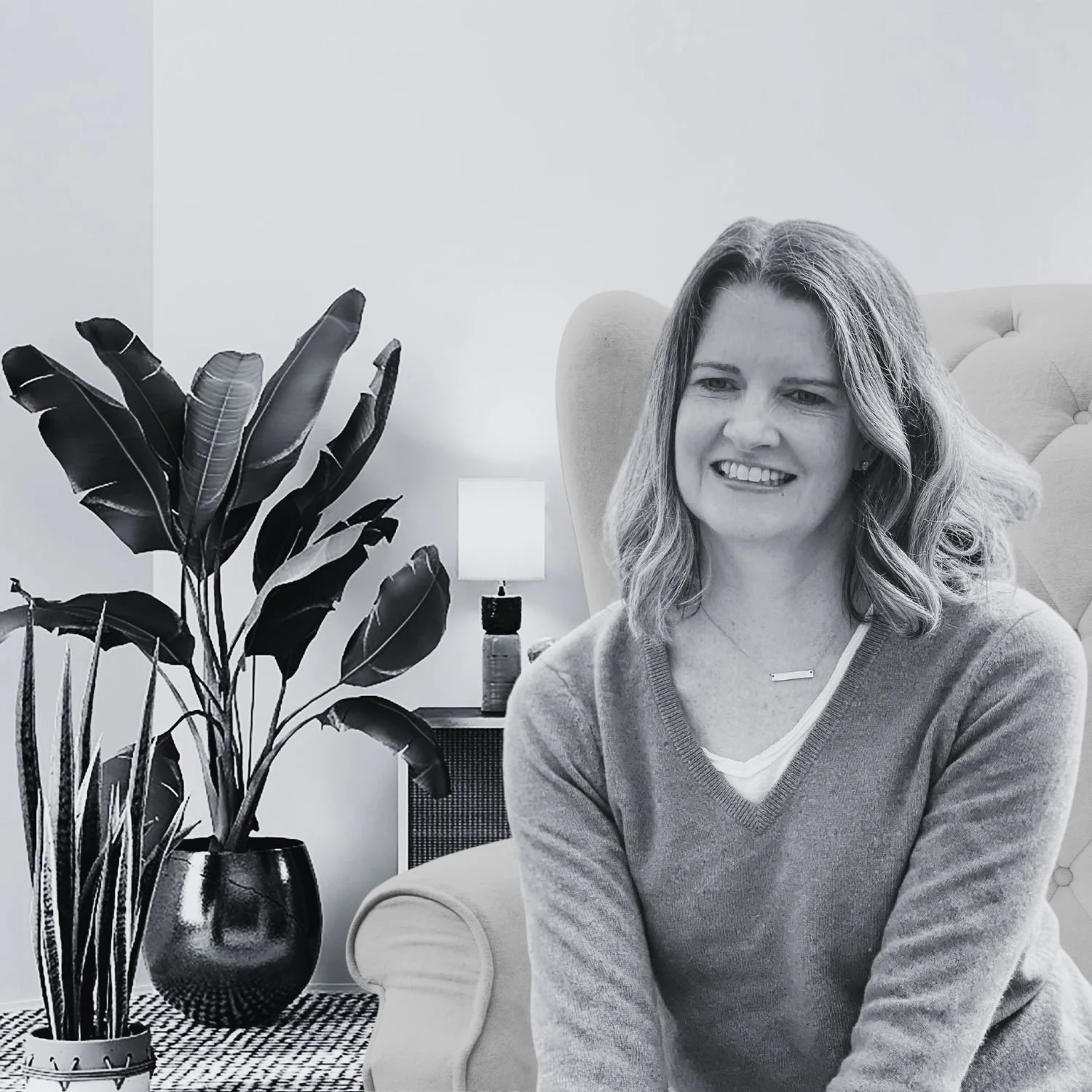
You know your patterns. You understand why you do this. But understanding doesn't make it stop. That's because perfectionism and overthinking aren't just thought patterns. They're survival strategies your body learned a long time ago — and your body hasn't gotten the memo that it's safe to let them go. Therapy for overthinking works at this level — not just the thoughts, but what's driving them. Caroline Wessling, LMFT is a therapist based in San Francisco who works online throughout CA using evidence-based talk therapy and Brainspotting to get to the root of what causes your anxiety so you can heal it at the source.

Your anxiety isn't a personal failure. It's how you learned to cope.
It's a nervous-system response to the chronic pressure to get it right, to handle it, to stay ahead of mistakes, and prove your worth through what you achieve.At some point, being careful and self-critical probably helped. It may have kept you safe, connected, or valued. This was how you learned to protect yourself and maintain attachments to those you needed most. And over time, you adapted. Now those patterns run automatically — to the point that you don’t even notice them.
It’s okay to let those patterns go.

Imagine Your Life Beyond Anxiety
Imagine moving through your day without getting caught up in second-guessing and worry spirals.
Imagine being confident and resilient, knowing you can navigate challenging situations
Imagine letting go of guilt for saying yes to yourself, feeling more rooted in what you actually feel and need
Imagine kindly holding boundaries that protect your energy and your heart.
Imagine your inner critic being quiet. Finally.
All of this is possible for you.
Lasting change is possible with anxiety therapy tailored to your unique needs.

Lasting change is possible with anxiety therapy tailored to your unique needs.

In therapy, our work together goes beyond suraface-level approaches to work on your anxiety at its source. So that you can feel like yourself again.
Here's what we do:
Understand the roots of your anxiety
The perfectionism, the people-pleasing, the constant monitoring—these didn't appear out of nowhere. We'll explore what you’ve learned about safety, worth, and connection. Insight about the programs that have been running behind the scenes for years helps it make sense—and starts loosening the pattern's grip.
Release the pattern at the source
You can understand why you overthink every decision, but that doesn't stop you from lying awake analyzing what you said wrong. That's because the anxiety lives in your body, not just your thoughts. We’ll help your nervous system actually release the fear and tension—so you can make decisions without endless research, rest without guilt, and say no without self-doubt.
Reconnect with your authentic self
However anxiety is showing up in your life, underneath the perfectionism and overthinking, there's a version of you that knows what you need, what you want, and what's actually important. We'll help you find that again.
Build new patterns
Right now, the overthinking, the self-criticism, the automatic yes—these happen so fast you don't even notice until later. We'll work on catching the pattern earlier. and building the capacity to pause and choose a different response—not perfectly, but progressively.

Why it Works
Mindfulness-Based Insight Therapy
We'll explore the origins of the expectations you've internalized, the self-judgment you carry, and the relational patterns that keep perfectionism and people-pleasing in place. You'll understand where these patterns came from and what they're costing you.
Brainspotting
Because talking about it isn't enough, we use Brainspotting— a brain-body approach that helps your nervous system release the tension, pressure, and fear that drives your overthinking and second-guessing. Leaving space to create something new.Learn more about working together

Ready to accelerate your healing?
In addition to weekly therapy sessions, I offer intensive therapy sessions that offer quick and lasting resolution to overthinking and second-guessing. One-, two, and three-day options available.
Weekly therapy or an Intensive

Weekly therapy sessions
50-minute weekly sessions This format works well if you want:
- Consistent support as patterns show up in real time
- Space to work on multiple areas over time
- Ongoing accountability and skill-building
- Gradual, sustainable change
Investment: $250 / session

Therapy Intensives
Extended sessions over 1-2 daysThis format works well if you're:
- Stuck in long-standing patterns of perfectionism or people-pleasing
- Dealing with burnout from over-functioning
- Limited on time but ready to go deep
- Wanting accelerated progress
Investment: $1,200-3,400
The approach is the same whether you choose weekly sessions or an intensive. The difference is pacing and structure.
Not sure which format is right for you? Schedule a free 15-minute consultation and we'll figure it out together.

Who can benefit from therapy for anxiety?
This approach might be a good fit if you...
Feel driven to do more, be better, or get it right in order to feel okay
Struggle with chronic self-criticism or anxiety
Find yourself over-extending, saying yes when you want to say no
Feel disconnected from your own needs beneath the pressure to perform
Want more than surface-level coping strategies
Are ready to do the work (I'll guide you, but this requires your participation)
You don't need to keep proving your worth
You're already enough as you are
Common Questions about Anxiety Therapy
If you don't see your questions here, check out my Full FAQs-
It depends. Some clients work with me for a few months to address specific patterns. Others work with me for a year or more as they make deeper shifts. We'll check in regularly about your progress.
-
Yes — overthinking is one of the most common patterns I work with. It usually isn't a thinking problem. It's a nervous system response to chronic internal pressure — and it responds well to both talk therapy and Brainspotting. If you lie awake replaying conversations, research decisions endlessly without feeling confident, or can't seem to turn off the mental noise, that's exactly what we address here.
-
While there are no guarantees, I do know that many of my clients have tried therapy that stayed too surface-level—focused on changing thoughts without addressing the deeper patterns. The combination of talk therapy and Brainspotting often works when traditional therapy alone hasn't been enough.
-
Mindfulness-Based Insight therapy is a proven approach to help with overwhelm due to overthinking, self-doubt, and second-guessing. It helps you develop deeper insights into the anxious patterns that are running in the background so you can rewire them.
-
Brainspotting is an evidence-based approach that helps you access your body’s own capacity to heal and achieve deep, lasting change. Your eye positions are linked to different areas of your mind that store thoughts, emotions, and beliefs. With Brainspotting, we can access stored trauma or pain by fixing your eye positions on specific locations.
Research indicates it may be more effective than Eye Movement Desensitization and Reprocessing (EMDR) and Cognitive Behavioral Therapy (CBT) due to its increased precision.
Curious? Click here to learn more.
-
Therapy intensives offer concentrated, focused work that bring accelerated results, accomplishing what takes a year or more in weekly therapy in days.
-
Just click the “Contact Me” button to book our initial call. During our call together, we’ll have a short conversation about what’s bringing you to therapy now, answer any additional questions you might have, and overall get a chance to see if we’re a good fit.